Pregnancy and becoming a parent can be exciting, meaningful and completely life-changing.
They can also be overwhelming, frightening, lonely and sometimes nothing like you expected.
Perhaps you're experiencing anxiety during pregnancy. Maybe you're struggling after a difficult birth, questioning your identity since becoming a mum, feeling overwhelmed by parenthood or simply thinking:
“I don't feel like myself anymore.”
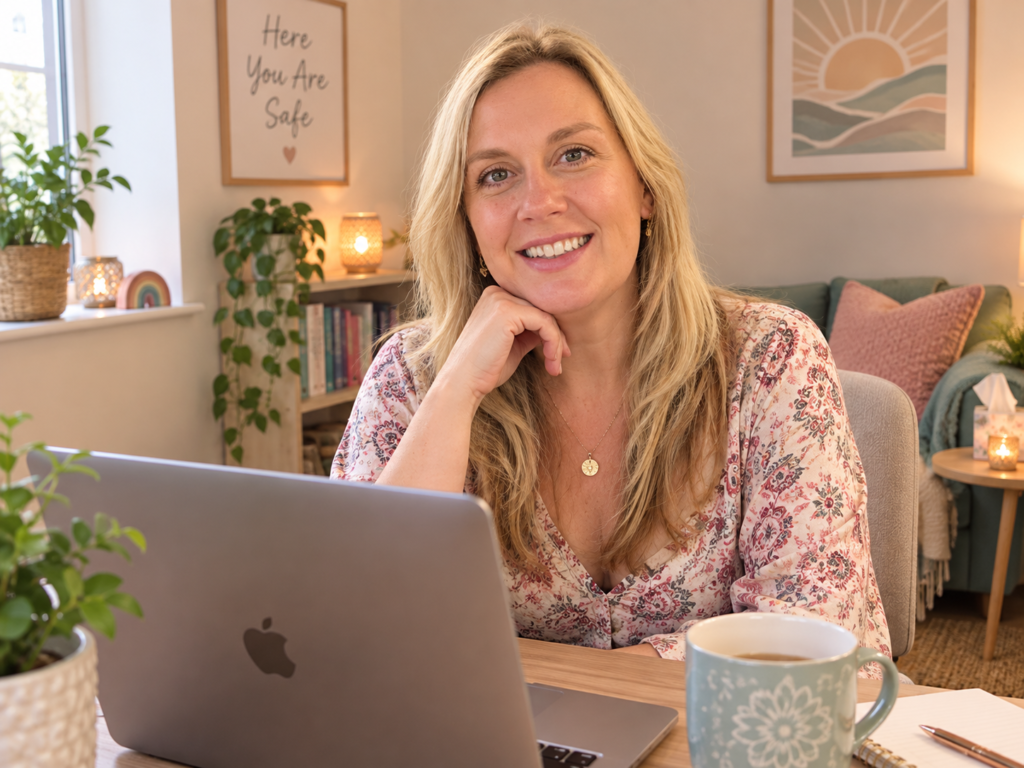
I'm Terri, a BACP Registered Counsellor and founder of Parent Perspective, an online counselling, coaching and hypnobirthing service supporting people through pregnancy, the postnatal period and parenthood.
I created Parent Perspective because I think we need more honest conversations about what becoming a parent can actually feel like — including the experiences that don't always make it into the baby books.
Why can pregnancy and becoming a parent affect your mental health?
Having a baby doesn't simply change your daily routine.
Pregnancy, birth and parenthood can affect your relationships, body, sleep, career, independence, finances, priorities and sense of identity...often at the same time.
You might experience:
- anxiety during pregnancy or after birth
- low mood or feeling emotionally overwhelmed
- intrusive or frightening thoughts
- a difficult or traumatic birth experience
- fear of giving birth
- difficulties around feeding
- guilt about how you think you “should” feel
- relationship changes
- loneliness or isolation
- loss of confidence
- uncertainty about returning to work
- feeling as though you've lost your identity since becoming a parent
Sometimes there's a clear problem.
Sometimes there isn't.
You might simply know that you don't feel quite like you anymore.
Why don't I feel like myself since becoming a mum?
This is one of the areas I'm particularly interested in because it's something we don't talk about enough.
We spend an enormous amount of time preparing for babies.
Which pram?
Which car seat?
How will I feed them?
What should I put in my hospital bag?
Where will they sleep?
But there's another transition happening alongside pregnancy and birth:
You are becoming a mother.
The psychological and developmental transition into motherhood is sometimes described as matrescence.
It's often compared with adolescence because both involve significant periods of physical, psychological and social change.
You aren't simply learning how to care for another human being. You may also be renegotiating who you are.
Your priorities may change.
Your relationships may change.
Your body has changed.
Your independence may look completely different.
Your career might suddenly feel more important?...or less important?
And your previous identity now has to exist alongside the enormous new identity of being somebody's mum.
That can create feelings of loss.
You might love your child enormously and still miss your old life.
You can be grateful to be a mum and miss having freedom.
You can enjoy maternity leave and desperately miss work.
You can want time away from your baby and miss them the moment you're apart.
These experiences aren't as contradictory as they initially seem.
Parenthood can contain more than one emotion at once.
What is perinatal counselling?
Perinatal counselling provides psychological support around pregnancy, birth and the period surrounding becoming a parent.
You might choose counselling because you're experiencing something specific, such as pregnancy anxiety, birth trauma, postnatal anxiety or difficulties adjusting after having a baby.
But counselling doesn't have to begin with a diagnosis.
You might start with:
“I'm overwhelmed.”
“I'm constantly worrying.”
“My birth keeps going around in my head.”
“I don't recognise myself anymore.”
“I thought becoming a mum would feel different.”
“I love my baby, so why am I unhappy?”
Those are perfectly valid places to begin.
Counselling gives us space to understand what you're experiencing rather than expecting you to arrive already knowing the answer.
How I work as a counsellor
I'm an integrative counsellor.
In simple terms, that means I don't believe everybody needs exactly the same type of therapy.
My work has a humanistic and person-centred foundation, so the relationship we build and your individual experience are central to the work.
Where appropriate, I can also draw upon approaches including Cognitive Behavioural Therapy (CBT), Acceptance and Commitment Therapy (ACT) and Dialectical Behaviour Therapy (DBT).
Some people want space to talk and understand what's happened.
Others want practical strategies alongside that exploration.
Often people need a combination of both.
Rather than trying to fit you into a particular therapeutic box, we can look at what you're experiencing and what might actually be useful for you.
What can Parent Perspective help with?
Parent Perspective has a particular focus on the emotional and psychological experiences surrounding pregnancy and parenthood, including:
Pregnancy anxiety and fear of birth
Pregnancy doesn't always feel calm or exciting. Previous experiences, uncertainty, health worries or fear surrounding birth can make pregnancy an incredibly anxious time.
Birth trauma
A birth doesn't have to look traumatic to somebody else for it to have felt traumatic to you. Feeling frightened, powerless, unheard or out of control can have a lasting emotional impact.
Matrescence and identity loss
If you've found yourself thinking “I love being their mum, but I don't know who I am anymore”, counselling or coaching can provide space to explore what's changed and what you want your life and identity to look like now.
Postnatal anxiety and emotional wellbeing
Constant worrying, intrusive thoughts, feeling overwhelmed or struggling to switch off can make early parenthood exhausting.
Adjusting to parenthood
Sometimes becoming a parent is simply much harder than expected. Relationships, responsibilities, sleep, work and your sense of freedom can all change at once.
Returning to work and career identity
Going back to work after having children can bring complicated feelings around guilt, confidence, ambition, childcare and what you now want from your career.
And you don't need to neatly fit into one of those categories.
People are considerably more complicated than website menus.
Is Parent Perspective only for mums?
No.
Although maternal mental health and matrescence are important areas within Parent Perspective, fathers and partners can struggle during the perinatal period too.
Becoming a dad can involve changes to identity, relationships, responsibility, finances and emotional wellbeing.
Partners can also be affected by difficult or traumatic births.
Parent Perspective provides space for those experiences as well.
Counselling, coaching or hypnobirthing? So what's the difference?
Parent Perspective offers three different forms of support.
Counselling focuses on your emotional and psychological wellbeing. It gives you a confidential space to explore what you're experiencing and understand what's happening.
Coaching is generally more future-focused. It can be particularly useful when you're exploring identity, confidence, returning to work, career decisions or changes you'd like to make following parenthood.
Hypnobirthing focuses on preparing for birth. It combines education, relaxation and practical techniques to help you approach labour feeling more informed, prepared and confident.
You don't need to understand all the differences before getting in touch. The important thing is finding the type of support that fits what you're experiencing.
Do I need to be struggling badly before I have counselling?
No.
This is probably one of the biggest messages I want Parent Perspective to communicate.
You don't have to wait until you're in crisis.
Sometimes people seek counselling because their mental health is significantly affecting everyday life.
Other people come because something simply doesn't feel right.
Perhaps you're functioning perfectly well from the outside but internally you're exhausted, anxious, disconnected or questioning who you've become.
You are allowed to want support before things become unbearable.
If you are experiencing a mental health crisis and feel you need more support you should call 111, contact your GP or attend your local accident and emergency.
More than somewhere to book counselling
I don't want Parent Perspective to simply be a website just to arrange counselling.
I want it to become somewhere you can find useful, realistic and evidence-informed information about the psychological side of becoming a parent.
You'll find articles and resources covering topics such as:
- matrescence and maternal identity
- pregnancy anxiety
- birth trauma
- postnatal mental health
- intrusive thoughts
- mum guilt
- relationships after having children
- returning to work
- paternal mental health
- identity and career changes
- the emotional reality of becoming a parent
No pretending that a bubble bath fixes burnout.
No expectation that you should be enjoying every minute.
And hopefully very little therapy jargon.
Just honest conversations about the parts of pregnancy and parenthood that deserve to be spoken about more openly.
Welcome to Parent Perspective
Sometimes we don't need somebody telling us what we should be doing.
We need somewhere to stop and work out what's actually happening.
To understand what we've experienced.
To see things from another perspective.
And sometimes, to rediscover parts of ourselves underneath everything that parenthood has added.
So whether you're pregnant, have recently had a baby, are several years into parenthood or are simply wondering where you fit into your life now:
Welcome to Parent Perspective.
I'm glad you've found me.
Terri
BACP Registered Counsellor
Founder of Parent Perspective