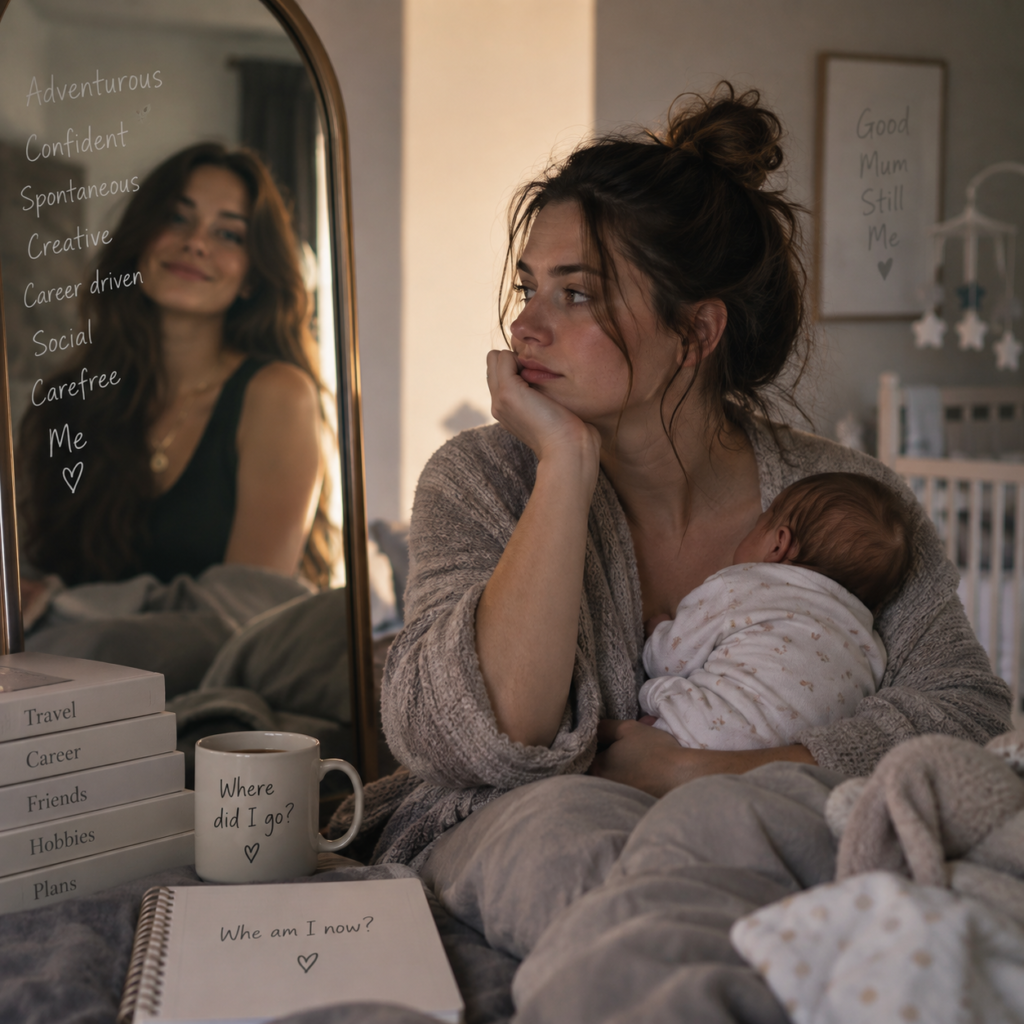
If you don’t feel like yourself after having a baby, it doesn’t automatically mean there’s something wrong with you.
Becoming a mother can change your routine, relationships, body, priorities and sense of who you are. This transition is sometimes called matrescence, and it can take much longer than people expect.
Before having a baby, you may have had more freedom to decide how you spent your time and which parts of yourself received your attention.
Perhaps you were a swimmer, a dancer or a painter. Maybe you loved your work, enjoyed travelling or could happily spend a Saturday afternoon doing absolutely nothing.
You may also have been a partner, friend, daughter, sister or colleague, without “mum” being the first thing people thought of when they saw you.
Becoming a mother doesn’t stop you from being any of those things. However, it can leave you with far less time and headspace to actually feel like them.
Suddenly, showering, eating or leaving the house can require military level planning. Even when you’re not physically caring for your baby, part of your mind may still be keeping track of feeds, nappies, sleep, appointments, childcare and whether that strange noise your baby made at 3am was normal.
That’s a lot of mental space to give to another person.
It’s understandable if your old sense of identity has become a little quieter.
What the Hell Is Matrescence, Anyway?
You may have heard of adolescence, but have you heard of matrescence?
The term was introduced by medical anthropologist Dana Raphael in the 1970s. It describes the transition involved in becoming a mother, including the physical, emotional, psychological and social changes that can happen along the way.
Matrescence is sometimes compared with adolescence. That isn’t because new mothers are like teenagers. It’s because both experiences involve enormous changes to the body, relationships, responsibilities and sense of identity.
When you become a mother, you may experience changes in:
- Your body and hormones
- Sleep and energy
- Relationships and intimacy
- Friendships and social life
- Work and career
- Confidence and independence
- Priorities and values
- Your sense of who you are
Unlike adolescence, matrescence is rarely spoken about.
People often prepare women for labour, birth and looking after a baby. There’s much less discussion about what it might actually feel like to become a mother.
In a 2023 survey of 2,000 British mothers by Peanut and Tommee Tippee, 62% said they felt they’d lost part of their identity since becoming a mother.
This was a commercial survey rather than a clinical study, but it gives us an idea of how commonly mothers report feeling this way.
When Everything Becomes About the Baby
From pregnancy onwards, so much of the attention around you may have focused on your baby.
You may have learnt about contractions, feeding, safe sleep, baby clothes, prams, car seats and which baby class you were apparently supposed to have booked six months ago.
You may have attended appointments where your baby’s growth and development were carefully monitored, while nobody asked much about how you were changing.
You might have found yourself thinking:
- Who am I now?
- Why don’t I feel like myself?
- How have I lost my identity since becoming a mum?
- Why doesn’t anyone ask how I am?
- I wanted this baby, so why am I finding it so difficult?
Research into the transition to motherhood has repeatedly found that becoming a mother can affect a woman’s sense of identity.
Pregnancy also creates measurable changes in the brain. Research has found changes in areas connected with social understanding and responsiveness. Some of these changes remained detectable for at least two years after birth.
Scientists are still learning exactly what these changes mean. They shouldn’t be seen as damage or as proof that every woman will think and feel in the same way.
Put simply, you’re not just adding a baby to your old life. Your body, brain, relationships, responsibilities and identity may all be adjusting at the same time.
No wonder it can feel overwhelming.
Am I Grieving My Old Identity?
Some women describe feeling a sense of grief for the person they were before becoming a mother.
That doesn’t mean they regret having their baby. It doesn’t mean they don’t love their child or that they’ve made the wrong decision.
They may simply miss their freedom, independence, confidence, career, friendships or connection with their own body.
You can love your child deeply and still miss who you were before them.
Both feelings can be true at the same time.
You may have desperately wanted a baby and still find pregnancy frightening.
You may adore your baby but struggle with sleep deprivation.
You may feel grateful to be a mother while missing your independence.
You may enjoy breastfeeding but sometimes want your body and personal space back.
You may feel lonely despite almost never being physically alone.
You may be desperate to return to work and then miss your baby when you’re there.
These mixed feelings are sometimes described as maternal ambivalence. This simply means having both positive and difficult feelings about motherhood at the same time.
It doesn’t make you an inadequate mother. It makes you a human being adjusting to an enormous life change.
The Pressure to Be a Perfect Mother
There seems to be an unspoken idea that a good mother should be endlessly patient, grateful, organised and completely selfless.
She apparently enjoys every moment, prepares nutritious meals, keeps the house tidy, plans stimulating activities and never dreams about hiding in the bathroom for ten minutes.
The problem is that this imaginary mother doesn’t really exist.
Actual mothers become exhausted, frustrated, bored, overwhelmed and tired of being touched. They need rest, privacy, adult conversation and parts of their lives that aren’t entirely about their children.
Research has found that unrealistic expectations of motherhood can contribute to guilt, shame and feelings of failure. This can be particularly difficult when your real experience doesn’t match the version of motherhood you thought you were supposed to enjoy.
Perhaps perfect isn’t a realistic or particularly helpful goal.
Children don’t need flawless mothers. They need caregivers who respond to them, make mistakes, repair relationships and keep learning.
Why Does Everyone Else Seem to Be Coping Better Than Me?
But are they?
You may be comparing everything you think and feel on the inside with what another person is showing on the outside.
Another mum might look beautifully put together with a smiling baby and an immaculate home. What you may not know is that she couldn’t leave the house yesterday, cried in the kitchen that morning and spent most of the night worrying about whether her baby was feeding enough.
Social media can make this worse. You’re often looking at the best few seconds of somebody else’s day while living through every messy moment of your own.
There may also be a gap between the motherhood you imagined and the one you’re actually experiencing.
Perhaps you expected to be a relaxed mum but instead feel filled with anxiety.
Maybe you planned to breastfeed but couldn’t, or decided it was no longer right for you.
Perhaps your birth was nothing like the one you’d imagined.
You might love your baby without loving every part of looking after them.
When reality doesn’t match our expectations, it can be easy to decide that we’re the problem.
You aren’t failing simply because motherhood feels different from the version you pictured before you were living it.
How Can I Start to Feel Like Myself Again?
Instead of asking, “How do I get my old identity back?” it may be more helpful to ask:
Which parts of myself do I miss, and what did they give me?
For example:
- Do I miss nights out, or do I miss friendship, laughter and feeling carefree?
- Do I miss my job, or do I miss feeling capable, challenged and mentally stimulated?
- Do I miss exercise, or do I miss feeling strong and connected to my body?
- Do I miss time alone, or do I miss having moments when nobody needs anything from me?
When you understand what’s underneath the thing you miss, it becomes easier to think about how you might bring some of that feeling into your life now.
It could mean returning to a hobby, meeting a friend without the baby or finding a manageable way to move your body.
It might involve returning to work, making time for something that interests you or asking somebody else to take full responsibility for a task, rather than simply helping while you remain responsible for organising everything.
It doesn’t have to involve making a dramatic change.
Reconnecting with yourself might begin with one small part of the week that feels like it belongs to you.
You don’t necessarily need to become the person you were before having a baby. You may be getting to know a new version of yourself while making space for the parts of your old identity that still matter to you.
Is This a Normal Adjustment, or Do I Need More Support?
Mixed feelings and changes in identity can be part of adjusting to motherhood.
However, feeling unlike yourself can also happen alongside perinatal anxiety, depression, obsessive compulsive disorder, birth trauma or other mental health difficulties.
It may be time to speak to someone if these feelings aren’t going away, are becoming more difficult, are affecting your daily life or are making it hard to care for yourself or your baby.
You could speak with your GP, midwife, health visitor or another qualified professional.
You don’t need to know exactly what’s happening, or find the right label for it, before asking for support.
If you feel that you or your baby may be in immediate danger, call 999 or attend your nearest Accident and Emergency department.
Counselling for Identity Loss After Having a Baby
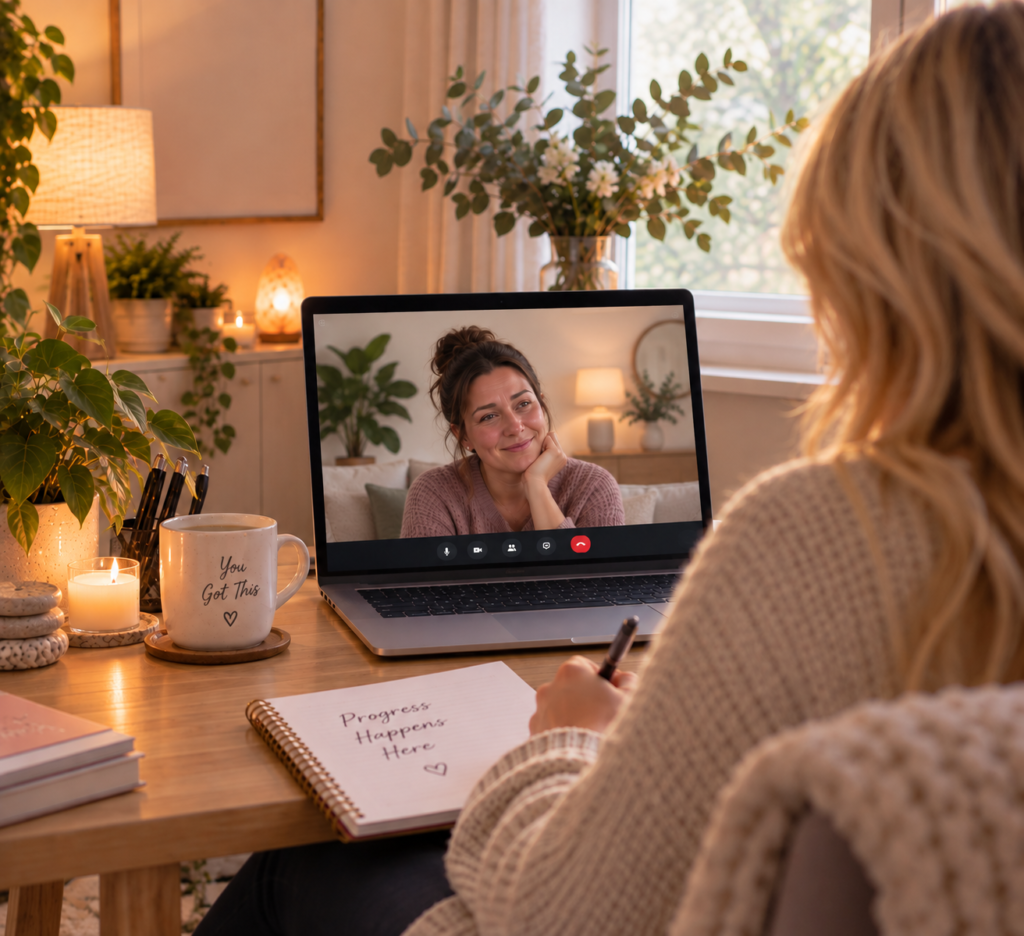
Counselling can give you time to explore what’s changed, how you feel about those changes and what you need now.
Parent Perspective focuses on the emotional parts of pregnancy and parenthood that can easily be overlooked. This includes identity loss, matrescence, anxiety, difficult birth experiences and changes within relationships.
Counselling isn’t about telling you how to parent or trying to turn you back into the person you were before.
It can help you make sense of what you’re experiencing, understand what matters to you now and reconnect with the parts of yourself that may have become quieter since becoming a mother. For further information you can download a I love my baby...so why don't I feel like myself anymore?
Rediscovering yourself after becoming a mother.
To learn more, find out about counselling with Parent Perspective or arrange an initial 15-minute consultation.
References
Raphael, D. (1975). Matrescence, Becoming a Mother: A “New/Old” Rite de Passage. In D. Raphael, editor, Being Female: Reproduction, Power, and Change, pages 65 to 72. Mouton Publishers.
Peanut and Tommee Tippee. (2023). New Study Finds 95% of Mothers Experience Guilt and 62% Face Loss of Identity. Survey of 2,000 British mothers.
Darvill, R., Skirton, H. and Farrand, P. (2010). Psychological factors that impact on women’s experiences of first time motherhood: A qualitative study of the transition. Midwifery, 26(3), pages 357 to 366.
Hoekzema, E. and colleagues. (2017). Pregnancy leads to long lasting changes in human brain structure. Nature Neuroscience, 20(2), pages 287 to 296. https://doi.org/10.1038/nn.4458
Martínez García, M. and colleagues. (2022). Development and psychometric properties of the Maternal Ambivalence Scale in Spanish women. Frontiers in Psychology, 13, 855329.
Constantinou, G., Varela, S. and Buckby, B. (2024). What makes a good mother? Two decades of research reflecting social norms of motherhood. Journal of Family Theory and Review, 16(1), pages 57 to 78.
McLeish, J., Harvey, M., Redshaw, M. and Alderdice, F. (2020). First time mothers’ expectations and experiences of postnatal care in England. BMC Pregnancy and Childbirth, 20, 544.